
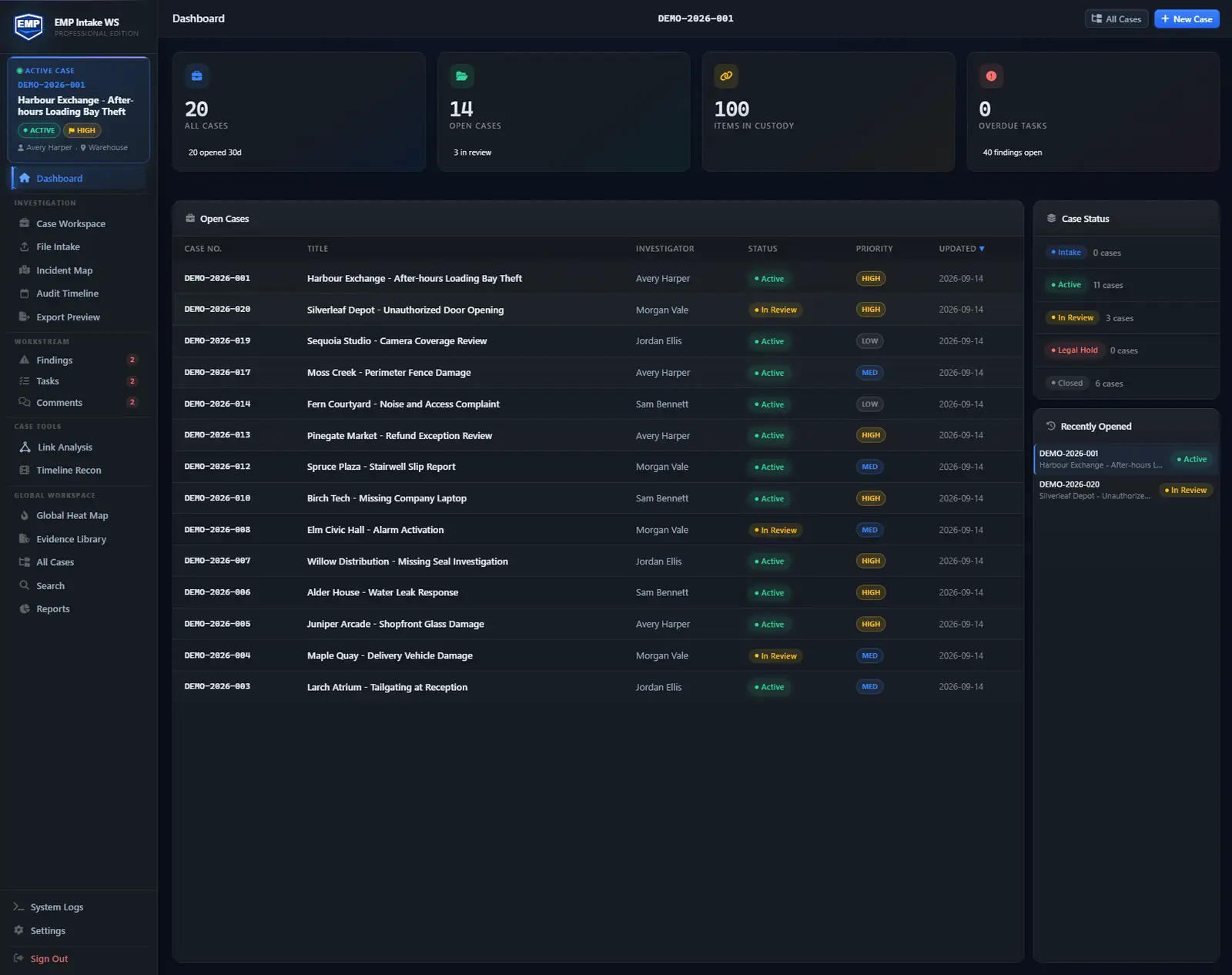
The EMP Intake Teams pilot is planned for 2027. It lets multiple investigators access and work in the same cases concurrently, with role-scoped permissions, attributed changes, edit presence, and conflict checks on case details and notes: a PostgreSQL database behind a Workspace API, running on infrastructure you control, never ours. Confirm the following deployment scenarios against the supported configuration for your pilot.
1. Planning the deployment
Teams runs on infrastructure you control. Start with the supported pilot configuration, then agree any LAN, dedicated-server or private-cloud requirements before deployment.
2. Solo mode: Teams features for one investigator
One investigator runs PostgreSQL locally, alongside the Teams client. Same code path as the multi-user deployments, same audit trail. This is for when you want the Teams workflow but don't yet have other users to share it with. Moving later means migrating the database and managed evidence files together, then verifying the restored workspace.
3. LAN team: the team-of-a-handful default
A supported host on your office network runs the shared workspace, with client workstations connecting through the Workspace API. This is the natural shape for a small investigations team on one network. Use the managed evidence storage agreed for your deployment.
4. On-prem server: multi-site with VPN
A dedicated host can serve a team beyond one office. Off-site access needs an approved secure network connection and a supported host configuration.
5. Private cloud: your account, your VPC, your IAM
Discuss private-cloud requirements during the pilot. Confirm the supported platform, database, storage, access controls and recovery process before deployment. The online services are license activation or validation, update checks, and map-resource requests for the incident map, which go to a Falcrex-controlled map delivery service using Cloudflare infrastructure. These requests do not contain case evidence or other case artifacts. File-based offline activation is available on request; an offline or self-hosted map is on the roadmap. Case data stays within the boundary you control.
6. Why clients never touch the database directly
Every shape shares one rule: the EMP client never opens a direct PostgreSQL connection. Supported application requests go through the Workspace API, which checks identity and permissions. The service records supported case and evidence actions, not every read or click.
Deploying EMP Intake for a team? EMP Intake Teams adds shared cases and role-scoped access across the team, with access checked by the Workspace API and supported actions recorded in the audit trail (pilot planned for 2027). Apply to the Teams pilot →